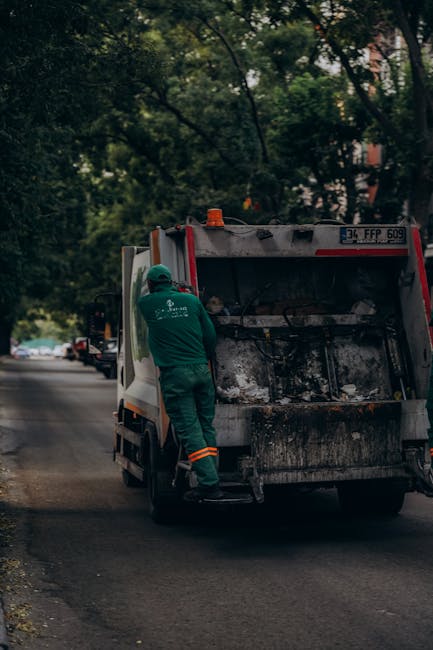
Same-day Leyton rubbish removal for emergency clearups
When rubbish suddenly piles up, the room can go from "a bit untidy" to completely unusable in no time. A burst pipe, a last-minute tenancy handover, builders leaving debris behind, a shop needing a quick reset before opening, or a house clearance that has to happen today - these are the moments when Same-day Leyton rubbish removal for emergency clearups makes all the difference. You do not have the luxury of waiting three days for the dust to settle, let alone a week.
The good news? A well-run same-day clearance service can take a stressful, messy situation and turn it into something manageable, often within hours. This guide explains how emergency rubbish removal works in Leyton, what to expect, how to prepare, what to avoid, and how to judge a provider properly. You will also find practical checklists, a comparison table, and a realistic example from a typical local clear-up.
For readers who want to understand the wider service standards behind the scenes, it can also help to look at the company's health and safety approach, insurance and safety information, and recycling and sustainability commitment. Those details matter more than people often realise, especially when the job is urgent.
Table of Contents
- Why Same-day Leyton rubbish removal for emergency clearups Matters
- How Same-day Leyton rubbish removal for emergency clearups Works
- Key Benefits and Practical Advantages
- Who This Is For and When It Makes Sense
- Step-by-Step Guidance
- Expert Tips for Better Results
- Common Mistakes to Avoid
- Tools, Resources and Recommendations
- Law, Compliance, Standards, or Best Practice
- Options, Methods, or Comparison Table
- Case Study or Real-World Example
- Practical Checklist
- Conclusion
- Frequently Asked Questions
Why Same-day Leyton rubbish removal for emergency clearups Matters
Emergency clearups are not just about tidiness. They are about regaining access, reducing risk, and stopping a small problem from becoming a bigger one. In Leyton, that might mean clearing a blocked hallway in a flat, removing broken furniture after a tenant moves out, or taking away builder's waste before an inspector, landlord, or customer arrives. It sounds simple. In practice, it can get messy fast.
Here is the thing: rubbish left in the wrong place can create knock-on problems. It can obstruct fire exits, attract pests, make a property look neglected, and slow down trades or lettings. If you are dealing with a time-sensitive situation, the value of same-day rubbish removal is not just speed. It is peace of mind, and a much cleaner next step.
A good emergency clear-up service also brings judgement. Not every pile of waste is handled the same way. Mixed household rubbish, garden waste, office furniture, broken appliances, plasterboard, and renovation debris all need different handling. That is where experience matters. A crew that knows what it is looking at can load efficiently, separate materials sensibly, and avoid turning a quick job into an expensive one.
Practical takeaway: if the waste is causing a safety issue, delaying a move, or stopping work on the property, same-day clearance is often the fastest way to put the day back on track.
It is also worth noting that trustworthy providers are usually clear about pricing and service scope from the start. For example, the company's pricing and quotes information can help set expectations before anyone arrives on site. That is especially useful when time is tight and nobody wants surprise charges at 5 p.m.
How Same-day Leyton rubbish removal for emergency clearups Works
The process is normally simpler than people expect, though it needs to be organised well. Most same-day collections follow a practical sequence: you explain the waste, the team assesses the job, a time is agreed, and the rubbish is removed and sorted for disposal or recycling.
In a real emergency, speed depends on a few things: access, volume, waste type, parking, and whether the load includes awkward items such as mattresses, office desks, broken shelving, or damp waste. A first-floor flat with a narrow staircase, for example, may take longer than a ground-floor garage clearout. Fair enough. That is just reality.
What usually happens on the day
- Initial contact: you describe the rubbish, location, and urgency.
- Quick assessment: the provider estimates crew size, vehicle type, and timing.
- Arrival and loading: the team removes the items safely and efficiently.
- Sorting: reusable, recyclable, and non-recyclable material is separated where possible.
- Completion check: the area is reviewed so you can use it again straight away.
For many people, the biggest relief is seeing the floor again. That first clear patch in a hallway or office corner can feel oddly emotional when you have been staring at clutter all morning. One small visible win, then another. It helps.
When payment and admin need to be handled quickly, make sure the provider's process is secure and straightforward. A page like payment and security guidance is a useful sign that the business takes customer confidence seriously, not just the collection itself.
Key Benefits and Practical Advantages
Same-day rubbish removal is not only about speed. It can improve safety, reduce stress, and keep a project moving. Those benefits sound obvious, but in an emergency they become very real very fast.
1. You regain usable space quickly
Whether it is a driveway, office corridor, front room, or garden path, clutter can stop the rest of the day from happening properly. A clear space lets cleaners, decorators, movers, tenants, or staff do their job without stepping around piles of waste.
2. You reduce risk
Loose debris, glass, sharp timber, and overloaded bin bags all create avoidable hazards. If someone can slip, trip, or cut themselves, it is better not to leave the mess sitting there. To be fair, most "we'll deal with it tomorrow" moments are fine. Until they are not.
3. You avoid delays
Emergency rubbish removal is often tied to another deadline. A rental check-out, a shop reopening, a delivery slot, a trades appointment, or a family move can all hinge on the waste being gone on time.
4. You get help with awkward items
Old sofas, white goods, heavy office furniture, broken cabinets, and mixed renovation waste are not fun to move by yourself. A same-day team does the lifting, loading, and transport properly.
5. You can often keep disposal more organised
A responsible service will not just "throw everything in a van" and hope for the best. Good operators think about sorting and diversion from landfill where practical. If that matters to you, the provider's recycling and sustainability page is worth reading before you book.
Who This Is For and When It Makes Sense
Emergency clearance is not just for dramatic disaster scenes. Most jobs are fairly ordinary in context, just time-sensitive. The people who benefit most are those with a deadline, a safety concern, or a property that has to be handed back clean and usable.
- Tenants and landlords: for end-of-tenancy rubbish, abandoned items, or last-minute handovers.
- Homeowners: after DIY work, a loft clearout, or a sudden family situation that needs space clearing fast.
- Businesses: for office furniture, archive clutter, packaging waste, or post-refurbishment debris.
- Tradespeople: when builders' waste needs removing so the next stage can begin.
- Shops and hospitality venues: for front-of-house resets, storage room clearances, or emergency waste removal before opening hours.
- Estate managers and letting agents: when a property must be made presentable at very short notice.
If you are wondering whether your situation counts as an emergency, ask one simple question: is the rubbish actively stopping something else from happening? If yes, same-day removal usually makes sense.
In a Leyton terraced house, that could mean a blocked passage to the garden. In an office near the high street, it may be a pile of packaging and old monitors taking over a meeting room. Different setting, same problem. The day is on hold until the rubbish is gone.
Step-by-Step Guidance
If you want the smoothest possible same-day clear-up, a little preparation goes a long way. You do not need to overthink it, but a few smart steps can save time, money, and back-and-forth phone calls.
Step 1: Identify exactly what needs removing
Walk through the space and make a basic list. Note bulky items, bagged waste, broken items, and anything that may need special handling. Mixed waste is fine, but the clearer your description, the better the quote and timing estimate.
Step 2: Take quick photos
Photos from different angles help the provider understand volume and access. A few clear pictures can reveal a lot more than a rushed description, especially if there are stairs, a narrow entrance, or awkward furniture.
Step 3: Check access and parking
This matters more than people expect. Can a van stop nearby? Is there a permit zone? Are there steps or tight corners? A 10-minute access problem can turn into a 30-minute headache if nobody mentions it upfront.
Step 4: Ask about handling and sorting
Good providers should be able to explain how they deal with reusable, recyclable, and non-recyclable materials. That does not mean every item is recycled. It means the team is working responsibly and knows the basic route each type of waste should take.
Step 5: Confirm timing and price structure
Ask what is included, whether labour is covered, and whether the quote depends on the final load size. If you want a broader sense of how quotes are put together, the pricing page is a helpful reference point.
Step 6: Clear a path before the team arrives
Move anything you want to keep. Unlock gates if needed. Put aside keys, access codes, or parking instructions. Little things, yes, but they shave time off the job.
Step 7: Do a final walk-through after removal
Check the cleared area, confirm nothing important was taken by mistake, and make sure any remaining dust, nails, or small fragments are dealt with. Sometimes the space looks clean, but a few sharp bits are hiding near the skirting board. Easily missed.
Expert Tips for Better Results
A quick removal can still be a good one. The difference often comes down to preparation and expectations. Here are the details that tend to separate a smooth job from a frustrating one.
- Be honest about volume: underestimating the amount of rubbish is the most common reason same-day jobs run over.
- Separate special waste early: items like paint tins, chemicals, batteries, and electrical equipment may need different handling.
- Keep valuable items well away: if the area is cluttered, it is very easy for keepsakes, documents, or small electronics to get mixed in.
- Ask for confirmation of arrival windows: emergency work is time-sensitive, but a realistic arrival estimate is still useful.
- Check reputation for safety: a team that works carefully is worth more than one that just rushes. Speed without control is, well, not much use.
One subtle tip: if the clearance is happening during a busy period on the street, ask how the team will manage loading. In parts of Leyton, a few extra minutes planning around traffic, pedestrians, or parking can prevent a lot of hassle. The van may be ready. The street may not be.
If you want reassurance before booking, read the provider's health and safety policy and insurance and safety information. It is not glamorous reading, granted, but it tells you a lot about how seriously they take the work.
Common Mistakes to Avoid
Emergency rubbish removal can be straightforward, but people often make the same avoidable mistakes when they are in a rush. That is understandable. Stress makes everyone a bit scatterbrained.
Leaving the booking until the last possible minute
If the job is urgent, contact the provider as soon as you realise it is urgent. Waiting for "later" can reduce the chances of getting a same-day slot.
Not mentioning access issues
Stairs, narrow halls, no parking, locked gates, shared entrances, and restricted hours all affect how the job is scheduled. Say it early.
Mixing prohibited or sensitive items into general rubbish
Paint, solvents, sharp waste, and certain electrical items may need separate handling. A quick conversation up front prevents awkwardness on arrival.
Assuming every provider handles every item the same way
Some operators are better suited to office clearance, others to domestic rubbish, and some to mixed clearances. Always check service fit rather than assuming.
Forgetting to ask about proof of responsible disposal
You do not need a lecture, but you do need confidence that the waste will be handled properly. A provider who can speak clearly about disposal standards is usually a safer bet.
And yes, it is tempting to just point at the pile and hope for the best. Most of us have been there. Still, a tiny bit of prep saves a big bit of stress.
Tools, Resources and Recommendations
You do not need specialist equipment to arrange an emergency clearance, but a few simple tools and resources make the process smoother.
- Phone camera: for photos of the waste, access route, and parking area.
- Notebook or notes app: to list items that must stay, items that must go, and any special instructions.
- Measuring tape: useful if you have large furniture or narrow access points.
- Basic gloves and sturdy shoes: only if you are moving a few safe items before the team arrives.
- Property keys or access codes: keep these ready so nobody wastes time waiting outside.
From a service perspective, the most useful resources are usually trust pages rather than sales pages. For instance, the provider's accessibility statement can help customers who may need support with communication or access arrangements, while the complaints procedure shows there is a clear route if something does not go as expected. That sort of transparency matters more than a flashy slogan.
For readers comparing providers, it can also help to check how the company handles privacy and site use. The cookie policy is not directly about rubbish removal, of course, but it does show whether the business maintains proper website standards and user transparency.
Law, Compliance, Standards, or Best Practice
Rubbish removal is not just a practical service; it also touches on safety, duty of care, transport, and responsible waste handling. You do not need to be a compliance expert to book a collection, but you should know the basics.
In the UK, reputable waste carriers are expected to handle waste lawfully and responsibly. As a customer, you are wise to choose a provider that can explain how waste is transported and where it is taken. That is especially important for mixed loads, office clearances, and emergency removals involving sensitive items.
Best practice usually includes:
- safe manual handling to reduce injury risk,
- careful loading to avoid damage to property,
- sorting for reuse or recycling where practical,
- clear communication about what can and cannot be taken,
- transparent pricing and booking terms,
- secure handling of customer information and payments.
If the job involves office premises or commercial sites, a provider should also be mindful of business continuity. You do not want waste removal to create a larger interruption than the rubbish itself. That is why safety and planning matter, not just speed.
And one more thing: if a company has thoughtful policies around modern slavery and ethical business practice, that can be a positive sign of wider operational maturity. It does not remove the need to ask questions, but it does strengthen trust.
Options, Methods, or Comparison Table
Not every rubbish problem needs the same solution. The right method depends on urgency, size, item type, and how quickly the space must be usable again.
| Method | Best for | Strengths | Limitations |
|---|---|---|---|
| Same-day rubbish removal | Urgent clearups, access issues, deadline-driven jobs | Fast, convenient, labour included, minimal disruption | May cost more than non-urgent collection; needs good access planning |
| Skip hire | Longer projects with ongoing waste generation | Useful for big renovation jobs; flexible over several days | Requires space, permits may be needed, loading is your responsibility |
| Tip run with a personal vehicle | Very small amounts of safe, permitted waste | Can be cheap if you already have transport | Time-consuming, labour-heavy, not ideal for bulky or awkward items |
| Planned collection | Non-urgent clearances | Often easier to schedule and budget | Not suitable for emergency situations or last-minute deadlines |
For urgent situations, the comparison is fairly simple. If the waste is stopping you from using the property today, same-day removal is usually the most practical route. If the job will stretch over several days, a different method may be better. The trick is matching the solution to the actual problem, not the idea of the problem.
Case Study or Real-World Example
Picture a small office unit in Leyton on a damp weekday morning. A storage area has been filling up for months with broken chairs, packaging, an old desk, and a few dismantled shelves. Then the landlord gives notice: the unit must be cleared by the end of the day because decorators are due the next morning. Suddenly it is not "just clutter" anymore.
The team sends photos, confirms access, and flags that the front entrance is narrow. The provider arrives with the right vehicle and two workers rather than one. They remove the bulky furniture first, then the mixed rubbish, then the smaller scraps that had fallen behind the desk. Nothing dramatic. Just efficient, calm work done properly.
By late afternoon, the room is empty, the floor is visible again, and the decorators can start on time. No frantic reshuffle. No last-minute apology to the landlord. No awkward delay. Truth be told, that is what good emergency clearance should feel like: not exciting, just relieving.
This is also where a provider's trust signals become visible. If the business is clear about how it operates, how it handles disputes, and how it protects customer payments, the whole experience feels less risky. You can review the provider's quote process and payment safeguards before booking, which is the sort of small step that saves bigger headaches later.
Practical Checklist
Use this before the team arrives. It keeps the job tidy and helps prevent unnecessary delays.
- Confirm the exact address and access details.
- Take photos of the waste from more than one angle.
- List any items that must stay in the property.
- Tell the provider about stairs, lifts, parking restrictions, or gated access.
- Identify any items needing special handling, such as batteries, paint, or electrical waste.
- Clear a safe path to the rubbish if you can do so easily.
- Keep children, pets, and customers away from the work area.
- Check the quote terms so you know what is included.
- Ask who will do the loading and whether labour is part of the service.
- Make sure someone on site can approve the work if questions come up.
A simple checklist like this can shave off a surprising amount of stress. And in an emergency, stress is usually the thing you have least room for.
Get a free quote today and see how much you can save.
Conclusion
Same-day Leyton rubbish removal for emergency clearups is about more than speed. It is about restoring order when time is short, pressure is high, and the space needs to be usable again now, not next week. Whether you are dealing with post-build debris, end-of-tenancy waste, office clutter, or a sudden household clear-up, the right service should feel calm, efficient, and transparent from the first message to the final sweep.
If you remember just three things, make them these: explain the waste clearly, check access early, and choose a provider that treats safety and responsible disposal as part of the service, not an afterthought. That is what separates a rushed collection from a genuinely useful emergency clear-up.
And if the mess feels overwhelming right now, that is normal. One clear step, then the next. Before long, the place looks like itself again.
Frequently Asked Questions
How quickly can same-day rubbish removal in Leyton usually happen?
It depends on demand, access, and the type of waste, but same-day collections are typically arranged as soon as a crew and vehicle can be scheduled. The earlier you contact the provider, the better the chance of securing a fast slot.
What kinds of emergency clearups can be handled on the same day?
Common examples include end-of-tenancy rubbish, office clutter, broken furniture, renovation debris, garden waste, and general household clearouts. Very specialised waste may need separate handling, so it is best to mention it early.
Is same-day rubbish removal more expensive than a planned collection?
Often, yes, because the service is prioritised and arranged at short notice. That said, the final price depends on volume, item type, access, and labour required. A clear quote helps avoid surprises.
Do I need to move everything outside before the team arrives?
No, not usually. Most same-day rubbish removal services include the lifting and loading. It does help if you identify what is going and clear a path, but you should not have to do the heavy work yourself.
Can you remove bulky items like sofas, desks, and mattresses?
Yes, these are common items in emergency clearups. Just mention them when you book so the team brings the right vehicle and enough crew members.
What if my property has difficult access or no parking nearby?
Tell the provider as soon as possible. Narrow staircases, permit zones, or long walking distances can affect timing and pricing, but they are usually manageable if the team knows in advance.
How do I know the rubbish will be handled responsibly?
Look for clear information about disposal, recycling, safety, and insurance. A professional provider should be able to explain how waste is sorted and transported without dodging the question.
Can emergency clearups include office waste and mixed commercial rubbish?
Yes, if the provider handles commercial work. Office furniture, archived paperwork, packaging, and mixed rubbish are all common in urgent business clearances.
What should I do with batteries, paint, or electrical waste?
Do not hide them in general rubbish. Mention these items separately, because they may need specific disposal arrangements. It is a small step that avoids a bigger problem later.
Is it worth asking about insurance and safety before booking?
Absolutely. Insurance and safety information matters because emergency work often involves lifting, tight access, and heavier items. A reputable provider should be transparent about this.
What if I need the space cleared before contractors or tenants arrive?
That is one of the most common reasons people book same-day rubbish removal. Explain the deadline clearly, and ask for the earliest possible arrival window so the job can be planned around your schedule.
Can I get a quote before confirming the job?
Yes, and you should. A quote based on photos and a clear description is often enough to give a useful estimate. If you want a simple starting point, check the provider's pricing and quotes page and then confirm the details directly.
What happens if I am not happy with the service?
Good businesses should have a clear complaints process and respond professionally. It is always reassuring to know there is a proper route for feedback before you book, not after.
How can I make the same-day collection go faster?
Send photos, confirm access, state the urgency, keep the area reachable, and list any items that must stay. Those simple actions often save the most time, which is handy when every hour counts.